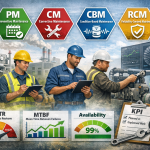



In asset-intensive organizations—such as buildings, hospitals, industrial plants, urban infrastructure, hotels, and commercial complexes—the real cost is not simply “buying equipment.” The true cost is a combination of:
Lifetime operating and maintenance costs (OPEX)
Risk exposure (service/production outages, safety, environmental impact, reputation)
Capital decisions (CAPEX) such as renewal, upgrades, and replacement
User experience and service levels (within the built environment)
This is exactly where Physical Asset Management (PAM) comes in as a decision-making system:
How do we maximize value from assets across their lifecycle by balancing cost, risk, and performance?
The Institute of Asset Management website quotes the ISO definition as follows:
Asset management is “the coordinated activity of an organization to realize value from assets.”
That short sentence creates two important distinctions:
The focus is not “the asset itself,” but the value the asset must create.
This is not just the responsibility of maintenance or facilities teams—it is a coordinated organizational activity that aligns finance, technical functions, operations, and management.
The ISO 55000 series is published by the International Organization for Standardization and effectively serves as the global common language for asset management.
ISO 55000:2024 is the updated foundational standard and provides the overview, principles, and vocabulary needed to develop a proactive asset management approach.
Important note: The 2014 edition of this standard has been withdrawn, and the new 2024 edition has replaced it.
ISO 55001:2024 specifies the requirements for establishing, implementing, maintaining, and improving an asset management system.
ISO 55002:2018 provides guidance and examples for applying an asset management system in line with ISO 55001 and is applicable to all asset types and organizations.
Note: The 2014 edition of ISO 55002 has also been withdrawn, and the 2018 edition is the replacement.
If your organization previously worked with ISO 55001:2014, the 2024 edition includes several key changes that push implementation toward a more practical, decision-focused approach:
The 2024 edition introduces a new section on asset management decision-making and value, connecting asset-related decisions—at all levels—to value creation.
In the new version, actions addressing risk and actions addressing opportunity are separated, enabling a more precise and deliberate approach.
A major highlight of the 2024 edition is that the Strategic Asset Management Plan (SAMP) is now explicitly included as a key requirement / document within the standard.
SAMP is the document that connects organizational objectives to asset management objectives and shows how programs and decisions will be shaped.
In IAM guidance for SAMP (quoting ISO 55000:2014), SAMP is documented information that specifies:
how organizational objectives are translated into asset management objectives,
the approach for developing asset management plans,
and the role of the asset management system in achieving the objectives.
That guidance also notes that ISO 55002:2018 (Annex C) provides further development and clarification on SAMP content. According to ISO committee explanations, in the 2024 edition, SAMP has been simplified and positioned as a key output of organizational planning.
In fact, implementation experience recommends the opposite: SAMP should be short, executive-friendly, readable, and action-oriented—so it gets used rather than buried in folders.
If we translate ISO 55001 into execution language, you need to build several outputs/subsystems for the system to truly work:
A policy answers: “What principles do we follow in asset-related decisions?”
For example: safety comes first; service levels are defined; decisions are risk-based; lifecycle thinking is applied; etc.
The 2024 edition places special emphasis on decision-making and value. You should therefore define decision criteria such as:
Technical criteria (reliability, safety, compliance)
Financial criteria (lifecycle cost, budget, cashflow)
Operational criteria (availability, service level, capacity)
Risk criteria (service/production outage risk, HSE, legal/regulatory risk)
SAMP should show:
what the organizational objectives are and how assets support them,
what the asset management objectives are,
the approach to planning and executing asset management,
the role of the asset management system in achieving the objectives.
Objectives should be measurable and linked to service level, risk, and cost (e.g., reducing repeat failures by 20% in critical assets; improving availability; reducing safety risk).
At the asset or asset-group level, plans should clarify:
what activities will be performed (maintenance, inspection, renewal, replacement),
with what resources and timeline,
with what outputs and KPIs.
ISO committee direction and related 55000-series resources show a move toward reliable information and better decisions. For your organization, that means:
asset register and asset hierarchy
standard identification/coding
work history, failures, costs, spare parts
data quality and data ownership
ISO 55002:2018 and guidance documents emphasize that risk management is inseparable from asset management, and the 2018 guidance places stronger emphasis on it.
This structure is executive-ready and suitable for presenting to the CEO or board:
Executive Summary
Organizational context and stakeholders (needs, requirements, service level)
Organizational objectives translated into asset management objectives
Scope of the asset management system (which assets/sites)
Decision-making principles and policy (value, risk, lifecycle)
Current asset status (health/condition, critical risks, gaps)
Lifecycle strategies (maintenance, renewal, replacement, disposal)
Key 12–36 month programs (improvements, projects, data digitization)
KPIs and monitoring criteria (cost, risk, performance, service level)
Governance, roles, and responsibilities (asset owner, operations, finance, contractors)
Review and continual improvement (review cycles and audits)
To make the system manageable, KPIs must be understandable to finance leaders and actionable for technical teams:
Service level / availability for critical assets
Asset health / condition index
Lifecycle cost or annual maintenance cost per asset / per m² / per production unit
Residual risk of critical assets (after controls)
PM compliance and the percentage of planned work vs total work
Repeat failure rate and recurring root causes
Below is a realistic execution path that you can package as a consulting/implementation project:
Define asset scope and system boundaries
Identify stakeholders and service levels
Gap assessment against ISO 55001:2024
Develop the asset management policy and decision principles
Design governance (roles: asset owner, operator, finance, safety, contractor)
Draft SAMP as the primary planning output
Define organization-level and asset-level objectives and KPIs
Create/complete the asset register and minimum required data
Develop asset management plans for critical assets (AMPs)
Integrate with finance/procurement/project processes (decision alignment)
Implement asset risk management (risk/opportunity separated in 2024)
Operational lifecycle control (from operations through renewal/disposal)
Internal audit, management review, corrective actions, and improvement
Focusing on documentation instead of decision-making → make the decision framework and value criteria real.
Producing a “formal” SAMP that is unusable → write it short, executive-friendly, and action-oriented.
Weak data → fix the asset register and data quality before advanced KPIs.
Treating risk as HSE-only → include service/production outage risk and financial risk as well.
If you want to:
design an asset management system aligned with ISO 55001:2024,
build a real, executable SAMP,
standardize your asset register and data,
and prepare for audit/certification,
we can support you end-to-end—from gap assessment to implementation, training, documentation, KPI/SLA design, and internal audits.
The 2024 edition highlights decision-making and value, separates risk and opportunity, and introduces SAMP as a clear new clause and requirement.
ISO 55002 is an implementation guide that helps translate ISO 55001 requirements into practical processes and examples.
“The coordinated activity of an organization to realize value from assets.”
No. According to ISO, the 2014 edition has been withdrawn, and ISO 55000:2024 is the current edition.