Why Integrating FM and PAM Is a “Necessity,” Not a Choice
In many organizations, capital decisions (CAPEX) are made during the project phase, but the main burden of cost and risk shows up later in operations (OPEX). The outcome is familiar:
- “Good” equipment is purchased, but handover data is incomplete.
- “Planned” maintenance is carried out, but the root causes of failures are not resolved.
- Costs rise, yet renewal/replacement decisions are made too late.
A sustainable solution is not separating teams. It is integrating asset-management decision-making (PAM) with service delivery and operations (FM) across the entire lifecycle.
Facility Management (FM), according to IFMA (adopting the ISO definition), is an organizational function that integrates people, place, and process within the built environment to improve quality of life and the productivity of the core business.
Asset management, according to the ISO definition quoted by Institute of Asset Management, is the “coordinated activity of an organization to realize value from assets.”
Put these together and you get a “golden sentence”:
PAM decides what value and service level are needed—and with what balance of cost/risk/performance; FM delivers that value every day.
Standards That Make This Integration Practical
1) ISO 41001: The FM management system (service-oriented)
ISO 41001 requires organizations to be able to demonstrate effective and efficient FM delivery, aligned with the objectives of the Demand Organization, and to consistently meet stakeholder needs.
2) ISO 55000 / ISO 55001: The asset management system (decision-oriented)
ISO 55000 provides the framework and principles for developing a proactive asset management approach and ties it to lifecycle management and value realization.
ISO 55001 specifies the requirements for establishing, implementing, maintaining, and improving an asset management system.
3) ISO 15686-5: LCC (Life Cycle Cost) as the shared finance–technical language
ISO 15686-5 provides guidance for life cycle costing (LCC) analyses for buildings and built assets and states that LCC considers costs from acquisition/creation through operation and disposal/decommissioning.
4) ISO 19650 and Soft Landings: The “bridge” between projects and operations
BSI Group explains that ISO 19650 helps manage information about a built asset—using BIM—securely and consistently across the lifecycle.
BSRIA presents Soft Landings as a process that reduces the gap between early design intent and real operational outcomes (so the building performs “as promised”).
A Practical 7-Step Model to Integrate FM and PAM Across the Asset Lifecycle
This model is written to work both for buildings (office/commercial/healthcare/education) and for industrial/infrastructure sites.
Step 1) Strategy and defining value
Goal: Clarify what value assets must create (service level, safety, capacity, sustainability, user experience).
Key outputs (PAM + FM):
- Define service levels for each use-case (e.g., hospital: life-critical continuity; office: comfort and availability)
- Decision criteria: balancing cost/risk/performance
- Map critical assets and the consequences of failure
Why it matters: ISO 41001 emphasizes aligning FM with the Demand Organization’s objectives, and ISO 55000/55001 emphasize a systematic approach to realizing value from assets.
Step 2) Design and engineering (Design for Operability)
Goal: Prevent “hidden operational costs” through better design decisions.
Key integration actions:
- Perform LCC for design options (e.g., selecting chillers/boilers/pumps/generators): LCC covers acquisition through operation to disposal.
- Define operational information requirements from day one: what must be handed to FM? (asset list, specifications, coding, spares, proposed PM plan, acceptable performance limits)
Golden rule: Every design decision must answer this question clearly:
How will this choice affect OPEX, service-outage risk, and maintainability over the next 3 years?
Step 3) Procurement and construction (Procure & Build)
Goal: Convert lifecycle requirements into contracts and real deliverables.
Key actions:
- Include “data deliverables” in contracts: initial asset register, BOM, as-built drawings, manuals, parts lists, commissioning/start-up test plans
- Quality control through an operational lens: maintenance access, compliant routing, maintenance safety, asset tagging/labeling
Common failure point: When contracts focus only on “physical delivery” and information/data handover is not treated as critical.
Step 4) Commissioning, handover, and stabilization (Commissioning + Handover + Soft Landings)
Goal: Ensure the asset actually performs in line with operational needs.
Best practices:
- Use Soft Landings to bridge design intent and operational reality (reducing the promise–reality gap).
- Define an FM/PAM handover package that includes:
- Final asset register + asset hierarchy
- Initial PM plan + manufacturer recommendations + project experience
- Baseline performance KPIs for energy/comfort/availability
- Training for operators and maintenance teams
- Critical spares list and initial stocking levels
- Residual risk register and controls
Why this step is critical for integration: This is exactly where a project shifts from CAPEX to OPEX. If data and knowledge do not transfer here, you will pay the cost for years.
Step 5) Operations and maintenance (Operate & Maintain)
Goal: Deliver stable service, reduce failures, and control cost.
Role split:
- PAM: high-level decisions (budgets, renewals, policies, risk, service level)
- FM: service execution, contractor management, maintenance, energy/waste/HSE management, reporting
Link to standards:
- ISO 41001 focuses on effective and efficient FM delivery and meeting stakeholder needs.
- ISO 55001 emphasizes having an asset management system to achieve asset management objectives.
Execution “capsule” (to start fast):
- Work order system with prioritization based on asset criticality
- Real PM (not box-ticking): PM compliance + repeat-failure analysis
- KPI-based contractor management with monthly reporting
- A cost–risk–performance dashboard
Step 6) Optimization and renewal (Optimize & Renew)
Goal: Make smart decisions between “more maintenance” and “renew/replace.”
Here, PAM leads decisions and FM supplies the evidence.
- FM provides: failures, costs, energy, service downtime, quality indicators
- PAM decides: is continued maintenance economical, or should we renew?
The shared language for this decision is LCC, covering acquisition through disposal.
Step 7) Decommission and disposal (Decommission & Dispose)
Goal: Exit end-of-life assets safely and economically.
Key outputs:
- Decommissioning/replacement plan (with risk and cost analysis)
- Knowledge management: record reasons for disposal and lessons learned for future design/procurement
- Recycling/reuse within safety and environmental requirements
The Backbone of Integration: Data and the Information Flow from BIM to CMMS/CAFM
If FM–PAM integration were a building, its structural columns would be data.
ISO 19650 is designed for managing information across the lifecycle of a built asset using BIM. ISO also emphasizes that BIM standards organize data exchange across the lifecycle (from design and construction to operations).
Practical translation for your organization:
- From the project you receive “model/information handover” (as-built + asset data)
- You convert it into an asset register and asset structure
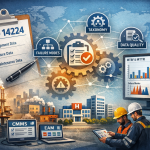
- It enters CMMS/CAFM/EAM
- Operational data (failures/cost/energy) feeds back into renewal and investment decisions
This is the digital thread that turns integration from a slogan into an operational reality.
A Simple, Practical RACI Role Matrix
To prevent overlap and “no owner,” use this simple split:
- Asset Owner: defines service level, accepts risk, approves CAPEX
- Asset Manager (PAM): policies, SAMP/plans, renewal/replacement decisions
- Facility Manager (FM): service delivery, SLA/KPIs, contractor management, reporting
- Maintenance Lead: PM/CM planning, reliability, spares
- HSE / Energy: safety and energy requirements, monitoring, compliance
Shared Integration KPIs (Cost–Risk–Performance)
To give FM and PAM a common language, design KPIs around three axes:
Performance
- Availability of critical assets
- PM completion rate vs plan
- Repeat failure rate
Cost
- Maintenance/operating cost per m² or per unit of production
- Lifecycle cost (LCC) for renewal decisions
Risk
- Service/production outage risk for critical assets
- Safety and compliance risk
An Implementation Roadmap for FM–PAM Integration
If you want to get an organization moving quickly:
1) Foundation
- Define asset and service scope
- Identify critical assets
- Define baseline KPIs and internal SLAs
- Build a minimum asset register + coding
2) Data and process integration
- Implement work order and PM processes
- Launch a monthly cost–risk–performance dashboard
- Define a “handover pack” for ongoing projects (handover package)
3) Lifecycle decision-making
- Run LCC on three major renewal decisions
- Define a 12–24 month renewal plan
- Start Soft Landings on new or soon-to-handover projects
If You Are Facing Any of These Issues…
- High and unpredictable OPEX
- Incomplete project handovers and missing asset data
- Repeat failures and delayed renewal decisions
- Conflict between project, operations, and finance teams
…we can design and implement an integrated FM + PAM lifecycle model for your assets—from data and handover requirements to process deployment and decision dashboards.
FAQ
1) What is the main difference between FM and PAM?
FM delivers built-environment services (aligned with the Demand Organization’s objectives). PAM provides the framework for realizing value from assets and for systematic decision-making.
2) Why is LCC critical for integration?
Because LCC considers costs from acquisition through operation to disposal and creates a shared finance–technical language.
3) How does ISO 19650 help integration?
It enables secure, consistent management of asset information using BIM across the lifecycle and standardizes data transfer from projects to operations.
4) What problem does Soft Landings solve?
It reduces the gap between design/construction and real operational performance and supports a “soft handover” to the O&M team.